KEY POINTS
Coaching principles can complement clinical treatment by helping clients translate recovery insights into meaningful behavioral change.
Active participation, self-reflection, and collaborative goal-setting can strengthen engagement in addiction recovery groups.
A structured group curriculum helps treatment centers deliver consistent, practical recovery education across levels of care.
Integrating coaching-informed exercises can help clients develop accountability, emotional regulation, and life skills that extend beyond treatment.
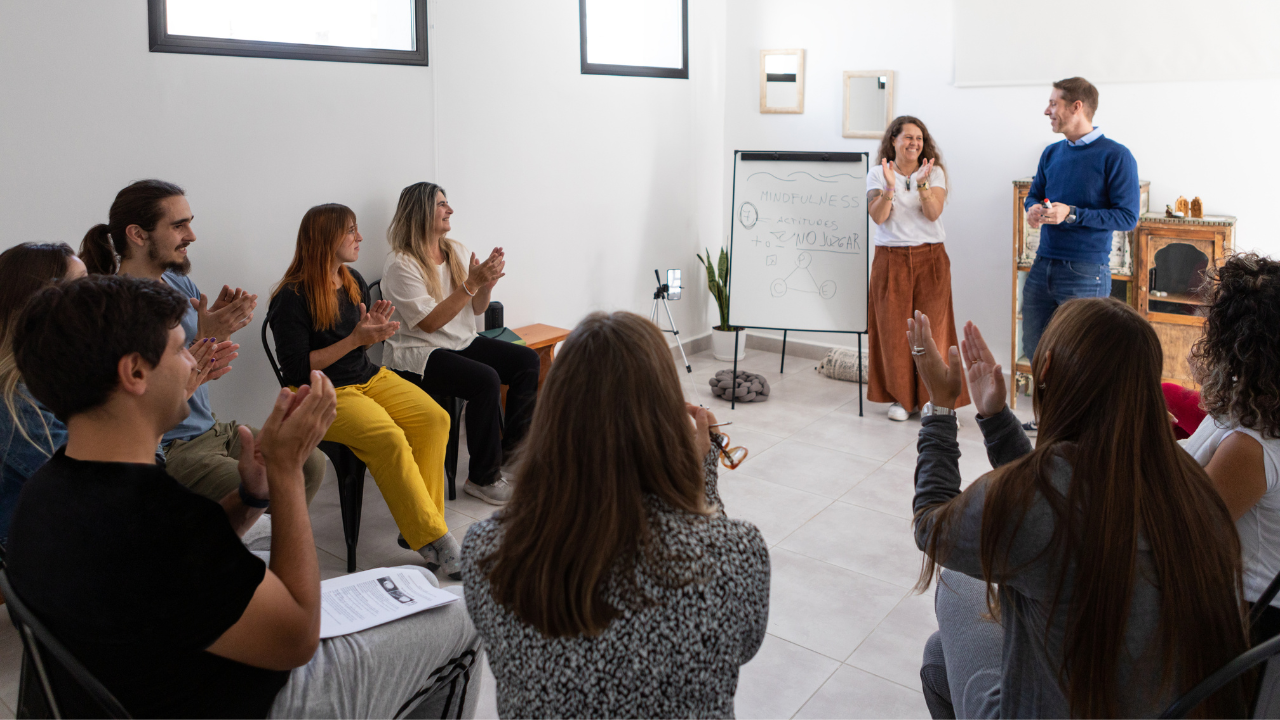
How integrating coaching-based strategies into a structured group curriculum for treatment centers can strengthen client engagement, personal accountability, and recovery-focused behavior change.
Treatment centers invest significant resources in helping individuals understand addiction, develop coping strategies, and establish a foundation for recovery. Yet one of the most important challenges in behavioral health treatment remains: How do we help clients translate what they learn in treatment into meaningful, sustainable changes in everyday life?
A client may understand the relationship between substance use and emotional distress, recognize destructive behavioral patterns, and even articulate a desire for change. However, intellectual understanding does not automatically translate into new behavior. Knowing what needs to change and consistently practicing that change are two different processes.
This is where coaching principles can make a valuable contribution to substance use disorder treatment programming.
When thoughtfully incorporated into psychoeducational groups, coaching-based approaches can complement traditional clinical interventions by encouraging self-reflection, strengthening personal agency, and helping clients move from insight toward intentional action.
For treatment centers evaluating their group curriculum for addiction recovery, the opportunity is not to replace therapy with coaching. Rather, it is to create a more integrated educational experience that connects clinical understanding with practical, real-world application.
Understanding the Difference Between Clinical Treatment and Coaching-Based Education
Clinical treatment and recovery coaching serve distinct but potentially complementary purposes. Licensed and appropriately credentialed treatment professionals assess and address substance use disorders, co-occurring mental health conditions, behavioral symptoms, and other clinical needs within their scope of practice. Coaching-oriented education, by comparison, emphasizes goal development, strengths identification, accountability, personal values, and the practical application of new skills.
These approaches need not compete.
A clinician might help a client recognize how emotional avoidance contributes to substance use. A coaching-informed group exercise can build on that insight by inviting the client to identify specific situations in which avoidance occurs, explore healthier responses, and develop a realistic plan for practicing those responses.
This distinction is especially relevant in residential treatment, partial hospitalization programs (PHP), intensive outpatient programs (IOP), and continuing care services, where clients benefit from opportunities to practice skills alongside receiving clinical support.
The Substance Abuse and Mental Health Services Administration (SAMHSA) emphasizes that recovery is a highly individualized process supported by multiple pathways, including clinical treatment, peer support, and other recovery resources. Its recovery framework also recognizes the importance of health, home, purpose, and community—dimensions that extend well beyond symptom management.
Source: SAMHSA — About Recovery
Moving Clients From Passive Participation to Active Engagement
One of the challenges in group programming is creating an environment in which clients become active participants in their own change process rather than passive recipients of information.
Psychoeducation is essential. Understanding the neuroscience of addiction, the relationship between thoughts and behaviors, and the influence of stress on decision-making can provide clients with important knowledge. However, education becomes more personally meaningful when individuals are invited to examine how that information relates to their experiences.
Coaching-informed facilitation emphasizes thoughtful questioning, collaborative exploration, and self-directed goal development. Instead of relying exclusively on instruction, facilitators can encourage clients to consider what they are learning, why it matters, and how they might apply it outside the treatment environment.
For example, a group focused on identifying triggers might move beyond asking clients to list high-risk situations. Participants could explore what those situations reveal about unmet needs, emotional patterns, environmental influences, and available coping resources. The discussion can then transition into identifying a practical response that the client is willing and able to practice.
This approach aligns with the principles of motivational interviewing, an evidence-based counseling method that supports individuals in exploring ambivalence and strengthening their motivation for change.
SAMHSA's Treatment Improvement Protocol (TIP) 35, Enhancing Motivation for Change in Substance Use Disorder Treatment, highlights the importance of empathy, collaboration, and respect for client autonomy throughout the behavior-change process.
Source: SAMHSA — TIP 35: Enhancing Motivation for Change
Strengthening Personal Accountability Without Reinforcing Shame
Accountability is frequently discussed in addiction treatment, but how it is introduced and reinforced matters.
For individuals who have experienced repeated setbacks, interpersonal conflict, or feelings of failure, accountability can sometimes be interpreted as criticism or punishment. Coaching-informed approaches offer an opportunity to reframe accountability as an expression of personal agency rather than a measure of personal worth.
Within a structured recovery group, accountability can involve identifying meaningful goals, recognizing barriers, evaluating decisions, and making adjustments when a strategy is not working.
Rather than viewing a setback as evidence that a client lacks motivation, facilitators can explore what the experience reveals about the client's current skills, environment, support system, or readiness for change.
This perspective is consistent with recovery-oriented, trauma-informed care, which recognizes that lasting behavioral change is rarely linear.
When clients learn to evaluate their choices without becoming overwhelmed by shame, they may be better positioned to participate honestly in treatment and continue practicing new behaviors after discharge.
Bridging the Gap Between Treatment and Everyday Life
Perhaps one of the strongest arguments for incorporating coaching principles into a substance use disorder group curriculum is the need to prepare clients for life beyond the structured treatment environment.
Within residential or intensive treatment settings, individuals often benefit from predictable schedules, professional support, reduced exposure to certain triggers, and opportunities for daily therapeutic engagement. Following discharge or a transition to a lower level of care, many of those external structures change.
Clients must begin navigating familiar relationships, workplace demands, family responsibilities, emotional discomfort, and environments associated with previous substance use.
A group curriculum that integrates practical goal-setting, values clarification, healthy boundaries, emotional regulation, and problem-solving can help clients rehearse the skills needed to manage these transitions.
For example, understanding the importance of boundaries is different from practicing how to communicate one. Recognizing emotional dysregulation is different from developing a personalized strategy for responding to it. Identifying personal values is different from consistently making decisions that reflect those values.
Coaching-based exercises provide structured opportunities to close the distance between these concepts.
The National Institute on Drug Abuse (NIDA) identifies behavioral interventions, skill development, problem-solving, and improvements in interpersonal functioning as important components of addiction treatment. These principles reinforce the value of helping clients develop practical behavioral skills alongside clinical care.
Source: NIDA — Principles of Drug Addiction Treatment
Why Consistency Matters in Treatment Center Group Curriculum
The effectiveness of group programming depends not only on the topics being discussed but also on how consistently those topics are delivered and reinforced.
Many treatment centers employ professionals with diverse backgrounds, specialties, and facilitation styles. This diversity can enrich the treatment experience, but without a structured educational framework, clients may encounter variations in content, learning objectives, and opportunities for skill application.
A well-developed group curriculum for treatment centers provides a shared foundation while allowing facilitators to respond to individual needs and group dynamics.
When lessons include defined objectives, guided discussions, reflective exercises, and practical application activities, treatment teams can deliver more consistent educational experiences across different groups and levels of care.
Structured programming can also reduce the time facilitators spend developing materials independently, allowing more attention to be directed toward engagement, observation, and meaningful discussion.
Importantly, consistency should not be confused with rigidity. Effective group facilitation requires clinical judgment, cultural responsiveness, trauma-informed awareness, and flexibility. A curriculum should support professional expertise, not replace it.
Integrating Coaching Principles Within Appropriate Clinical Boundaries
Incorporating coaching elements into addiction treatment does not mean asking unlicensed coaches to perform clinical interventions or encouraging treatment programs to substitute coaching for evidence-based care.
Instead, coaching-informed strategies can be integrated into existing psychoeducational groups under appropriate organizational oversight and within each facilitator's professional scope.
Treatment centers can begin by examining whether their current groups provide sufficient opportunities for clients to reflect on personal values, identify strengths, practice decision-making, develop meaningful goals, and evaluate progress.
Programs should also consider how group activities accommodate differences in cognitive functioning, trauma history, cultural background, treatment readiness, and individual recovery goals.
SAMHSA's guidance on recovery-oriented services emphasizes person-centered care, strengths-based engagement, and the recognition that individuals may pursue different pathways toward improved health and wellness.
These principles provide a useful foundation for treatment centers seeking to make group education more collaborative and recovery-focused.
A More Integrated Approach to Recovery Education
The future of effective addiction treatment programming is not necessarily about adding more information to an already demanding clinical schedule. It may be about helping clients engage more meaningfully with the information they are already receiving.
Clinical interventions can help individuals understand and address the conditions, symptoms, and experiences influencing substance use. Coaching-informed education can complement that work by helping clients connect insight with daily choices, personal responsibility, and purposeful action.
When these approaches are thoughtfully integrated, group programming can become more than a place where clients learn about recovery. It can become a structured environment where individuals begin practicing how they want to live.
Because lasting recovery is not simply about stopping a behavior. It is also about developing the skills, relationships, and sense of purpose that support a meaningful life beyond substance use.
Bringing Structured, Coaching-Informed Group Education to Your Treatment Center
The Empowered Recovery Curriculum was developed to support treatment centers seeking a structured, client-centered approach to recovery education.
Designed for residential, PHP, IOP, outpatient, and continuing care environments, the curriculum combines psychoeducation with coaching-informed strategies that encourage self-awareness, emotional regulation, behavioral change, personal accountability, and recovery-focused life skills.
With facilitator guidance, client workbooks, reflective exercises, and practical implementation resources, the curriculum provides treatment teams with a consistent framework for delivering engaging recovery education while maintaining the flexibility needed to support diverse client populations.
For organizations seeking to strengthen their addiction recovery group programming, the objective is straightforward: help clients do more than understand recovery—help them develop the skills to live it.
Explore the Empowered Recovery Curriculum for Treatment Centers

About the Author
PrairieYana Francia, CADC-I, is a Substance Use Disorder Counselor, Recovery Coach, and founder of the Empowered Recovery Framework. Combining professional training with lived experience, she specializes in helping individuals move beyond abstinence toward sustainable behavioral change, emotional well-being, and purpose-driven recovery.
She is the author of Empowered Recovery, creator of the Empowered Recovery Curriculum for Treatment Centers, and host of the Breaking Free From Within podcast.
Online: Empowered Recovery | Alignment with PrairieYana
This article discusses complementary educational strategies and does not suggest that coaching replaces licensed clinical treatment or that coaching-informed curricula independently produce specific clinical outcomes.
More from Empowered Recovery