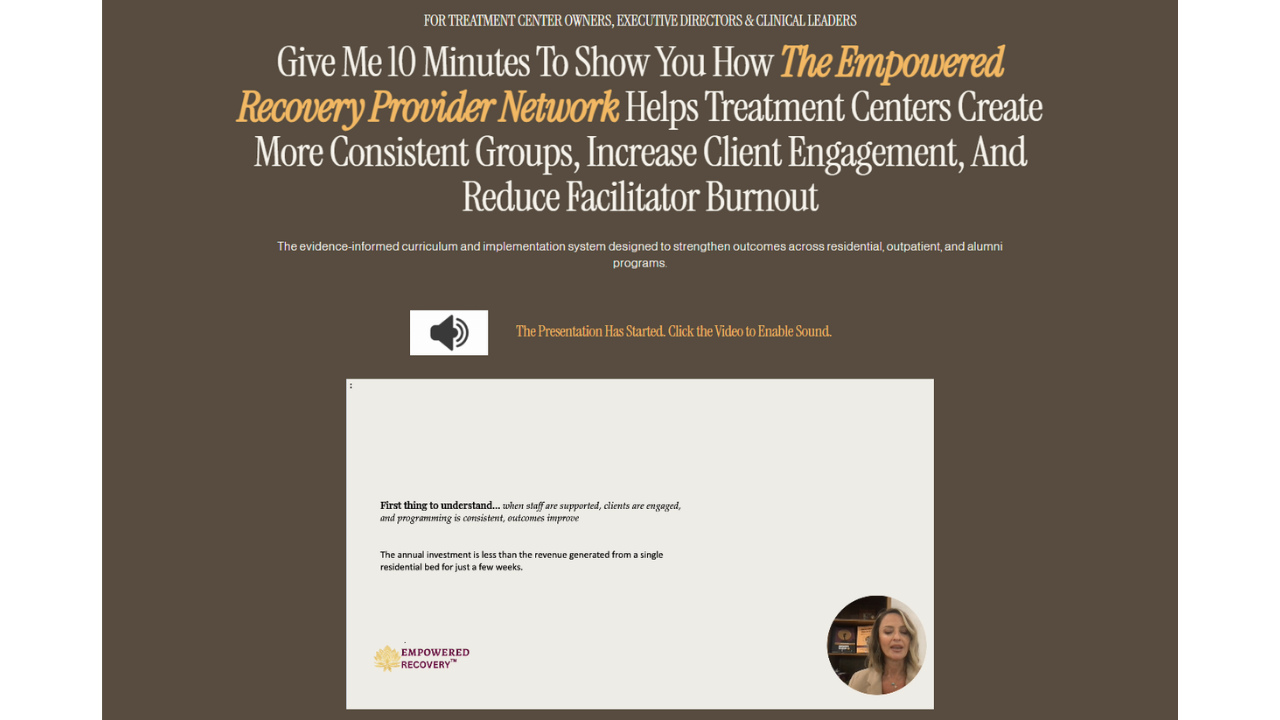
Group Curriculum for Addiction Treatment & Mental Health Centers
For Treatment Centers
A Curriculum That Solves the Problems Programs Actually Face
Reduce facilitator burnout. Increase consistency. Improve client outcomes.
Most treatment centers aren’t struggling because they lack good clinicians or dedicated staff.
They’re struggling because education delivery breaks down under real-world conditions.
Facilitators burn out. Groups vary wildly in quality. Clients leave knowing the rules — but not themselves. And strong clinical work often lacks a clear bridge into sustainable, real-life recovery.
The Empowered Recovery Curriculum was built to solve these exact problems.

The Real Problems We Address
Facilitator Burnout & Decision Fatigue
Facilitators are often expected to:
Create or adapt group content on the fly
Fill gaps between clinical sessions
Teach complex concepts without a shared structure
Carry emotional labor and curriculum design
This leads to exhaustion, inconsistency, and staff turnover.
Empowered Recovery removes that burden.
Facilitators know exactly:
What they’re teaching
Why it matters
How it supports the treatment phase
No scrambling. No reinventing the wheel. No guessing.
Inconsistent Group Quality
When groups depend on facilitator personality or interpretation, outcomes vary — even within the same program.
Empowered Recovery creates program-wide consistency through:

Structured lesson flows
Clear session structure so facilitators know exactly what to teach and how to guide each group.

Clear learning objectives
Every lesson has a defined purpose, focus, and outcome for both clients and staff.

Shared language across staff
Creates consistency in how concepts are taught, discussed, and reinforced throughout the program.

Repeatable, teachable content
Creates consistency in how concepts are taught, discussed, and reinforced throughout the program.
Clients Who Follow Rules but Don’t Understand Themselves
Many clients leave treatment knowing what not to do, but not:
Why their patterns developed
How stress impacts their nervous system
What to do when urges arise
How to stabilize emotionally outside a structured environment
Empowered Recovery teaches clients:
How behavior actually forms
How the nervous system drives urges and reactions
How identity and values influence decisions
How to regulate before behavior escalates
This creates understanding, not compliance — a key driver of long-term recovery success.
Proud Supporter Member of NAATP
Empowered Recovery is proud to be a Supporter Member of the National Association of Addiction Treatment Providers (NAATP). As part of this respected professional community, we are committed to supporting ethical, evidence-informed care and advancing quality treatment across the behavioral health field. Our membership reflects our dedication to collaborating with treatment providers, continually improving our educational resources, and helping organizations equip clients with practical tools for lasting recovery beyond treatment.
Functional Workbooks That Create Completion
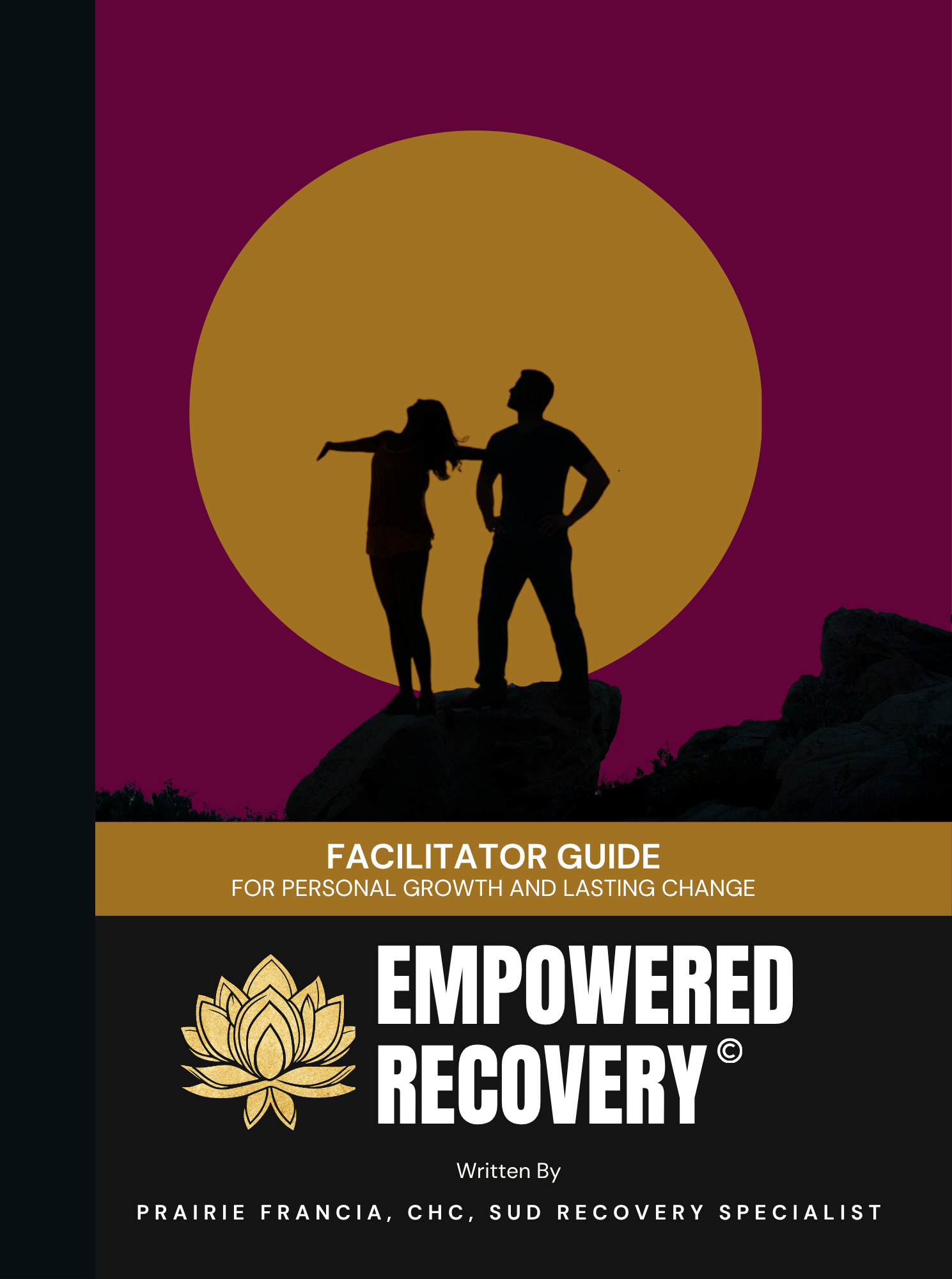
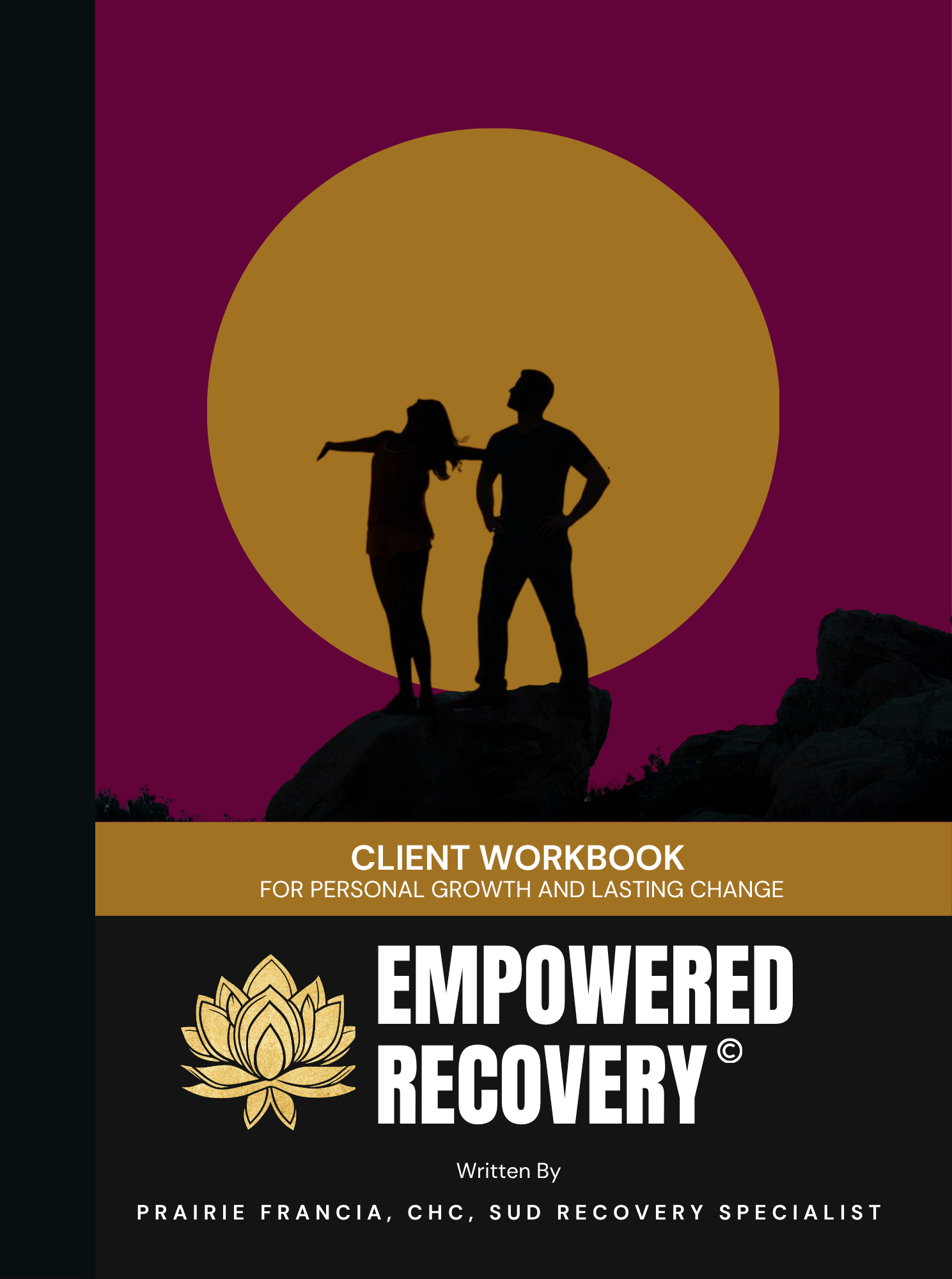
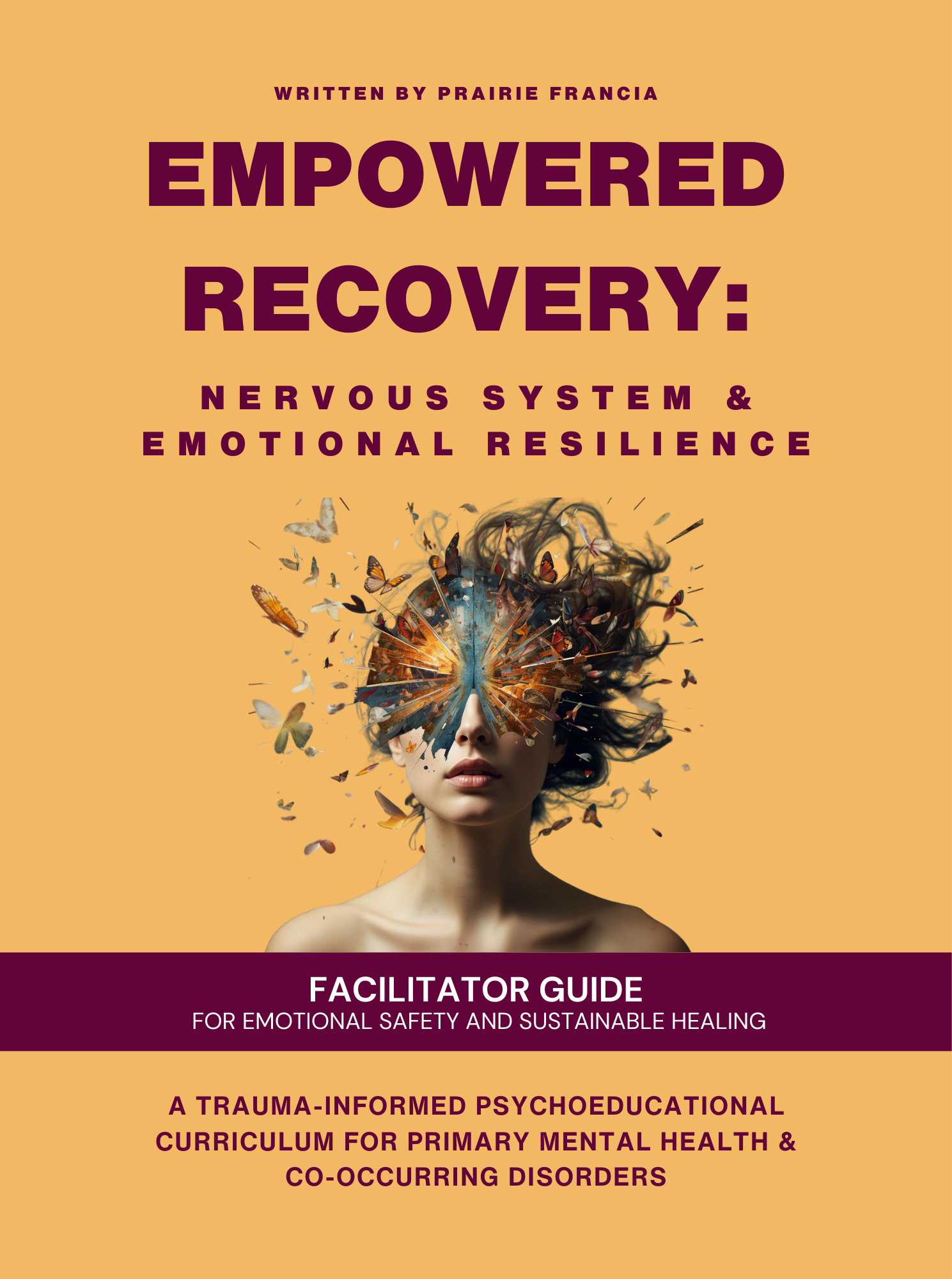
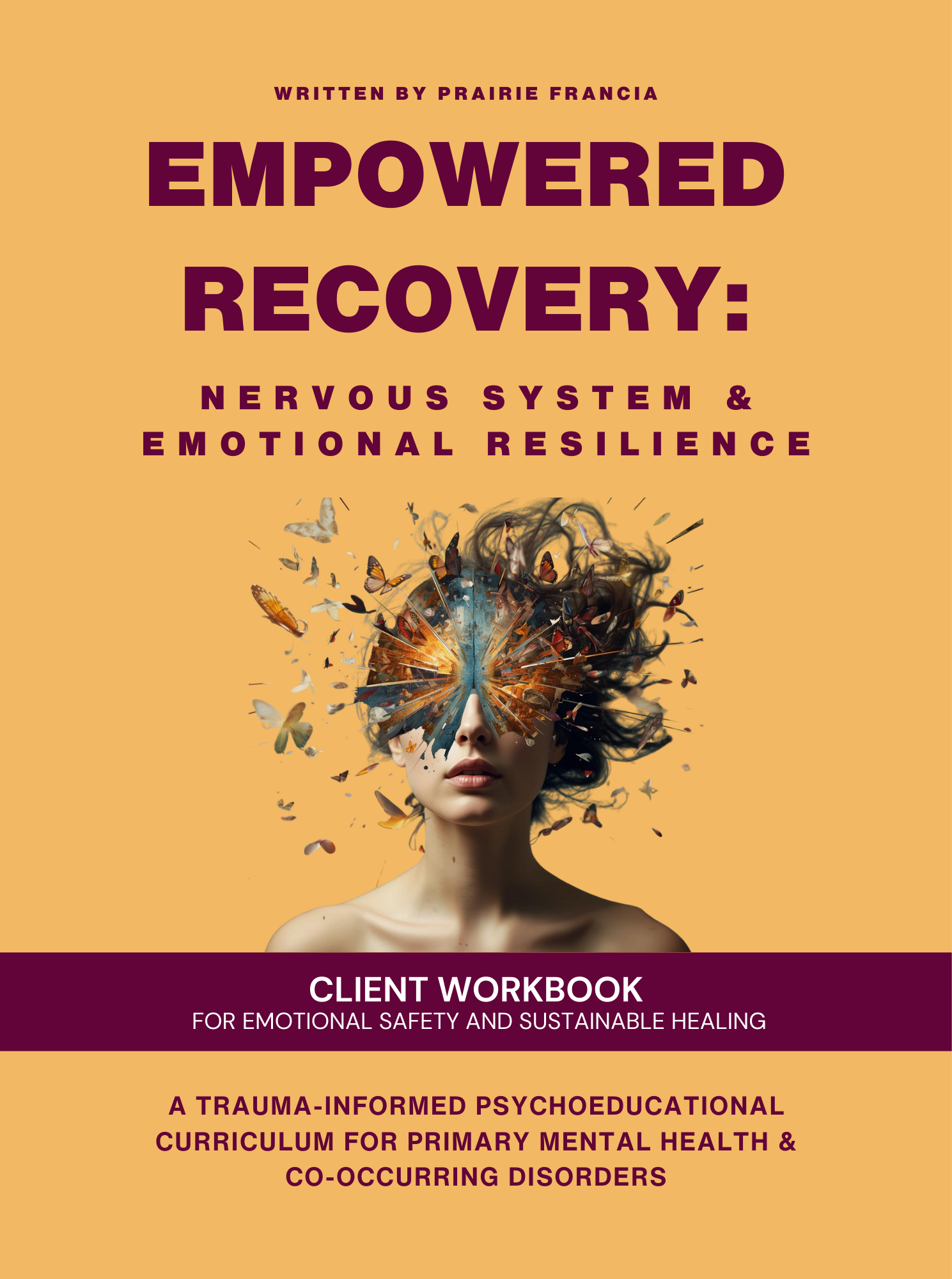
The client workbooks are functional tools, not filler. They are designed to reinforce each lesson, guide reflection without overwhelm, and help clients track insight and progress in a clear, manageable way. By creating a tangible sense of completion, the workbooks support motivation, retention, and confidence — especially for clients who struggle with follow-through or consistency. The facilitator guide complements this by providing structured lesson flow, clear talking points, and practical delivery support, ensuring consistency across groups while reducing preparation time and facilitator burnout.
Each Provider Network membership includes 18 client workbooks per month and five facilitator guides annually for one facility. Additional client workbooks and facilitator guides may be purchased as needed for each participating facility. Your membership also includes full access to the Provider Network Back Office, where facilitators can download and print lesson plans, worksheets, and supporting curriculum materials.
Stand Out with Your Certified Empowered Recovery Provider Badge
Showcase your commitment to structured, evidence-informed care and distinguish your practice as a trusted provider within the Empowered Recovery network—reinforcing credibility, consistency, and high-quality client outcomes.
Choose Your Empowered Recovery Curriculum Pathway
Choose the Provider Network Membership that best fits your organization. One membership license allows all facilities operating under your organization to access and implement the Empowered Recovery curriculum and Provider Network Back Office. Your membership includes a workbook subscription for one (1) facility, which includes 18 client workbooks per month and five facilitator guides annually. Additional facilities may use the curriculum but must purchase their own client workbooks and facilitator guides as needed.
Substance Use Pathway
This pathway is designed for providers working with clients navigating substance use and recovery. It offers structured, evidence-informed tools to address cravings, triggers, relapse prevention, and the development of sustainable recovery behaviors.
Primary Mental Health Pathway
This pathway supports providers working with clients experiencing anxiety, depression, trauma, or emotional dysregulation without a primary substance use concern. It emphasizes nervous system education, emotional resilience, and practical skill-building for daily stability and functioning.
Dual Diagnosis Pathway
This integrated pathway is designed for providers supporting clients with co-occurring substance use and mental health challenges. It offers a cohesive framework to address the interaction between emotional distress and maladaptive coping behaviors, supporting whole-person care.
Empowered Recovery Provider Network Membership Dues Structure
Annual Membership Options
Choose the Provider Network Membership that best fits your organization. One membership license allows all facilities operating under your organization to access and implement the Empowered Recovery curriculum and Provider Network Back Office. Your membership includes a workbook subscription for one (1) facility, which includes 18 client workbooks per month and five facilitator guides annually. Additional facilities may use the curriculum but must purchase their own client workbooks and facilitator guides as needed.
Empowered Recovery Curriculum Provider Network
Annual Membership
$18,000 per Year
What's Included
✔ 8+ Structured Curriculum Modules
Clear lesson flows, learning objectives, and ready-to-teach programming.
✔ Facilitator Knowledge Guides
Step-by-step preparation, teaching prompts, discussion questions, and pacing guidance.
✔ Structured Class Flow Layouts
Professionally designed lesson plans with minute-by-minute group facilitation.
✔ Complete Client Workbooks
Interactive exercises, reflections, skill-building activities, and progress tracking.
✔ Digital Provider Network Back Office
Instant access to curriculum materials, training videos, downloads, and implementation resources.
✔ Empowered Recovery Certified Provider Recognition
Listing as an Empowered Recovery Certified Provider and permission to market your partnership.
✔ Marketing Resource Package
Branded marketing materials to promote your Empowered Recovery programming.
✔ Annual Empowered Recovery Summit Invitation
Professional development and specialized training for your team.
✔ Workbook Subscription
Includes 18 Client Workbooks per month and 5 Facilitator Guides annually for one (1) facility. Additional facilities require separate workbook subscriptions.
Primary Mental Health Curriculum Provider Network
Annual Membership
$18,000 per Year
What's Included
✔ 8+ Structured Curriculum Modules
Trauma-informed psychoeducational programming focused on emotional regulation, resilience, and mental wellness.
✔ Facilitator Knowledge Guides
Comprehensive preparation materials, teaching prompts, and discussion frameworks.
✔ Structured Class Flow Layouts
Professionally organized lesson plans for consistent group facilitation.
✔ Complete Client Workbooks
Practical exercises, worksheets, reflections, and skill-building activities.
✔ Digital Provider Network Back Office
Access to curriculum resources, facilitator training, downloadable materials, and implementation support.
✔ Empowered Recovery Certified Provider Recognition
Listing as an Empowered Recovery Certified Provider and permission to market your partnership.
✔ Marketing Resource Package
Branded marketing materials to support program promotion.
✔ Annual Empowered Recovery Summit Invitation
Continuing education and collaboration with the Empowered Recovery community.
✔ Workbook Subscription
Includes 18 Client Workbooks per month and 5 Facilitator Guides annually for one (1) facility. Additional facilities require separate workbook subscriptions.
Dual Curriculum Provider Network
Bundle & Save
$24,000 per Year
What's Included
✔ Empowered Recovery Curriculum
Structured recovery education grounded in nervous system literacy, identity-based change, recovery capital, and relapse prevention.
✔ Primary Mental Health Curriculum
Trauma-informed psychoeducational programming focused on emotional regulation, stabilization, resilience, and mental wellness.
✔ Digital Provider Network Back Office Access
Complete access to both curriculum libraries, facilitator resources, implementation guidance, and training materials.
✔ All Facilitator Knowledge Guides
Step-by-step preparation, teaching prompts, structured lesson plans, discussion frameworks, and facilitation support for both curricula.
✔ Complete Client Workbooks for Both Programs
Interactive workbooks designed to reinforce learning, encourage reflection, and measure client progress.
✔ Curriculum Updates Throughout Your License Term
Receive ongoing curriculum enhancements and new resources as they become available.
✔ Empowered Recovery Certified Provider Recognition
Listing as an Empowered Recovery Certified Provider and permission to market both licensed programs.
✔ Marketing Resource Package
Branded marketing materials for promoting your Empowered Recovery and Primary Mental Health programming.
✔ Annual Empowered Recovery Summit Invitation
Continuing education, implementation training, and professional networking for your team.
✔ Workbook Subscription Access
Includes 18 Client Workbooks per month and 5 Facilitator Guides annually for each curriculum (36 Client Workbooks per month and 10 Facilitator Guides annually total) for one (1) facility. Additional facilities require separate workbook subscriptions.
Frequently Asked Questions
-
No. Empowered Recovery is a psychoeducational, non-therapy curriculum. It does not diagnose, treat, or replace clinical services. It is designed to complement therapy by helping clients understand behavior, regulate emotions, and apply skills in daily life.
-
Facilitators are no longer responsible for creating or adapting content for every group. The curriculum provides structured lesson flows, clear learning objectives, and ready-to-use materials, allowing staff to focus on facilitation and connection rather than preparation and decision fatigue.
-
Yes. Empowered Recovery is intentionally designed to integrate alongside CBT, DBT, trauma-informed care, 12-step–adjacent models, and other clinical approaches. It reinforces therapeutic work without duplicating or conflicting with it.
-
Clients learn why their patterns exist, how stress and the nervous system influence behavior, and what to do when urges or emotional overwhelm arise. This builds understanding, regulation, and self-leadership, which supports long-term recovery beyond rule-following.
-
Programs benefit from increased group engagement, stronger client insight, improved emotional regulation, and better continuity from treatment into aftercare. Clients leave with tools they can use independently, supporting higher retention and long-term recovery success.
-
Lessons are designed to fit into standard group times and can be rotated weekly or across multi-week cycles. New clients can enter at any point without disruption, while repeat exposure reinforces learning for longer-term clients.
-
The workbooks are functional integration tools, not passive handouts. They reinforce lessons, guide reflection without overwhelm, track progress, and create a sense of completion — which increases motivation and confidence, especially for clients who struggle with follow-through.
-
Licensing includes access to facilitator guides and structured lesson materials. Advanced licensing options include additional training and implementation support to ensure staff feel confident and aligned when delivering the curriculum.
-
Yes. Empowered Recovery is scalable across residential, PHP/IOP, outpatient, and alumni programs, allowing the same framework and language to follow clients through multiple phases of care.
Learn More
Explore How The Empowered Recovery Provider Network Helps Treatment Centers
Create More Consistent Groups, Increase Client Engagement, Reduce AMA And Facilitator Burnout