
Supporting the Supporters: Teaching Nervous System Regulation and Recovery at the PG&E Peer Support Conference
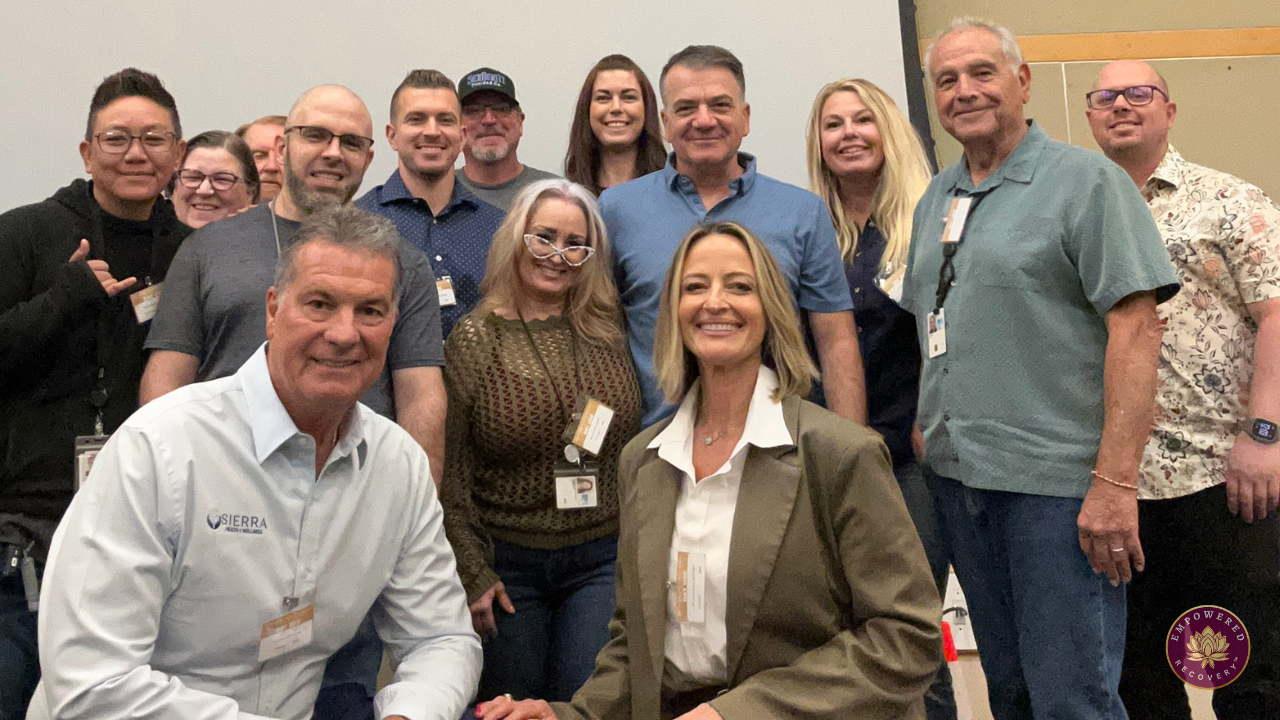
Recently, I had the privilege of speaking alongside the team from Sierra Health and Wellness Centers at the PG&E Peer Support Conference, where we spent time exploring the relationship between trauma, stress, nervous system regulation, addiction, and sustainable recovery.
The audience consisted primarily of peer support professionals—individuals who serve as a trusted resource for employees navigating life’s challenges, workplace stressors, personal crises, mental health concerns, and substance use issues. These professionals often become the first point of contact for employees seeking guidance during difficult times.
I am deeply grateful to Sierra Health & Wellness for inviting me to contribute to this educational opportunity and for their ongoing commitment to providing high-quality behavioral health services and trauma-informed care throughout California.
The Important Role of PG&E’s Peer Support Program
Organizations like PG&E recognize that employee wellbeing extends beyond physical safety. Utility workers face unique challenges that can impact mental health, emotional resilience, family relationships, and overall quality of life. PG&E provides employee wellness resources and emotional health support programs designed to help employees and their families access assistance when needed.
Peer support programs exist because employees often feel more comfortable talking to someone who understands the realities of their work environment. These programs provide confidential support, connection, resource navigation, and encouragement during times of stress and crisis.
Peer supporters are not therapists. They are compassionate listeners, connectors, advocates, and trusted colleagues who help individuals access the resources they need before challenges become overwhelming.
The Unique Challenges Faced by Utility Workers
Utility workers perform some of the most essential—and often most demanding—jobs in our communities.
Many employees work long hours, respond to emergencies, restore power during natural disasters, navigate hazardous environments, and carry significant responsibility for public safety. In recent years, workers have also faced increasing stress associated with wildfires, extreme weather events, public scrutiny, operational changes, and ongoing uncertainty throughout the industry.
These circumstances can create cumulative stress over time.
When the nervous system remains activated for prolonged periods, individuals may experience:
Increased anxiety
Irritability and emotional reactivity
Sleep disruption
Difficulty concentrating
Burnout and exhaustion
Feelings of isolation
Depression
Increased reliance on alcohol or other coping behaviors
Understanding these responses through a trauma-informed lens helps reduce stigma and encourages individuals to seek support before problems escalate.
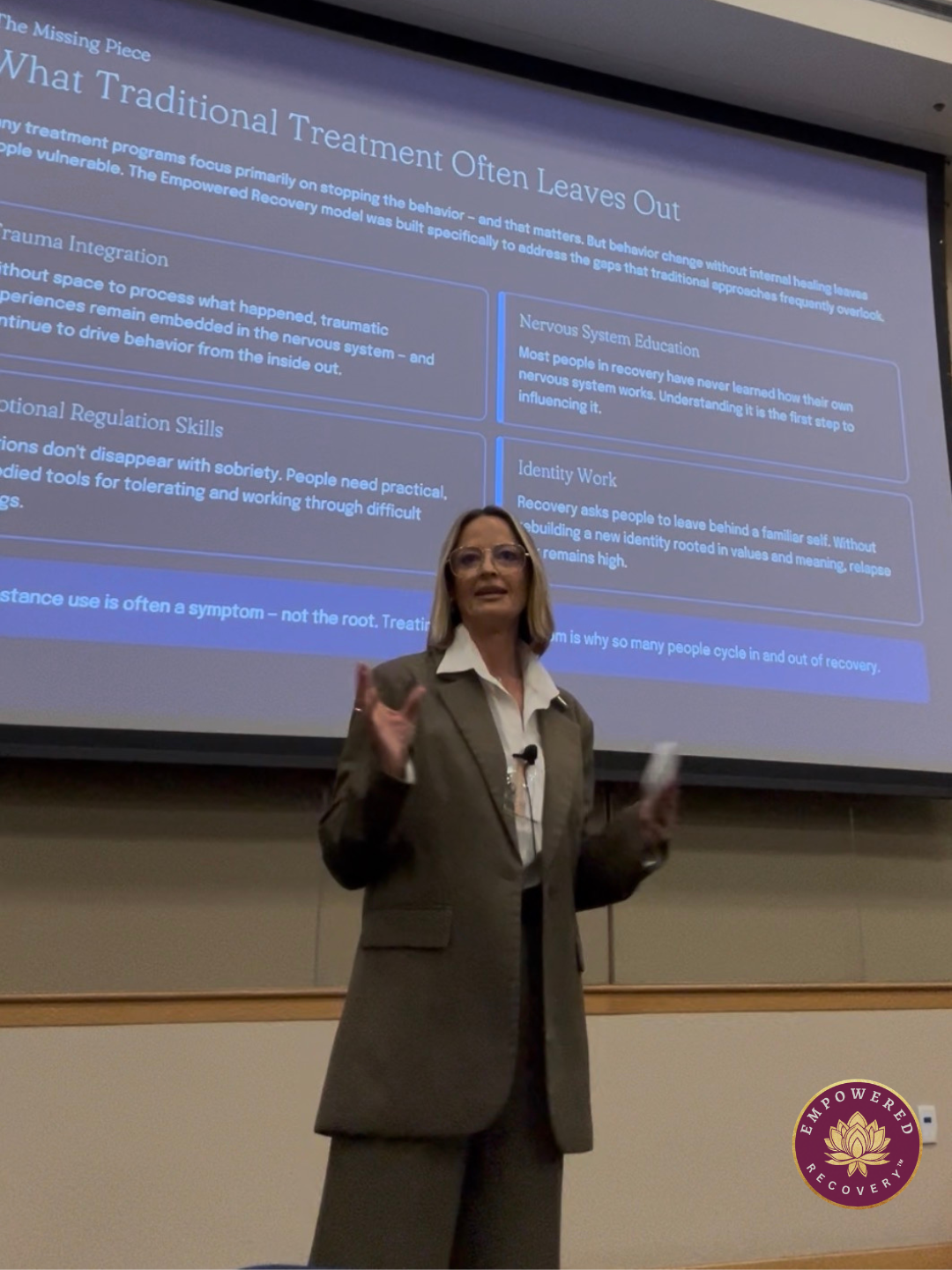
Why Nervous System Regulation Matters
My portion of the presentation focused on a topic that has become central to my work: nervous system regulation.
During my training as a Substance Use Disorder Counselor, I noticed that many treatment approaches focused heavily on stopping problematic behaviors while spending less time addressing the underlying emotional and physiological patterns driving those behaviors.
The question that continually emerged was:
What creates lasting recovery?
The answer rarely begins with willpower alone.
Many individuals struggling with addiction, emotional distress, chronic stress, or self-destructive behaviors are operating from a dysregulated nervous system. Their bodies have learned to stay in survival mode.
When this happens, the brain becomes more reactive and less reflective. People may become trapped in cycles of fight, flight, freeze, or fawn responses without fully understanding why.
Substances, compulsive behaviors, overworking, emotional avoidance, and other maladaptive coping strategies often serve a purpose: they temporarily help regulate emotional discomfort.
The problem is not that people are weak.
The problem is that many people have never been taught how to regulate their nervous systems in healthier ways.
You Cannot Heal Through Shame
One of the most important concepts we discussed was the difference between guilt and shame.
Guilt says:
“I made a mistake.”
Shame says:
“I am the mistake.”
Shame frequently fuels isolation, secrecy, avoidance, and continued suffering.
Whether someone is struggling with addiction, trauma, grief, anxiety, or workplace stress, healing requires more than behavior change. It requires safety, connection, self-awareness, and compassion.
Recovery becomes sustainable when individuals learn to understand their nervous system, process difficult emotions, reconnect with their values, and develop healthier ways to respond to life’s challenges.
The Development of Empowered Recovery
The ideas shared during the presentation are reflected in the work I have developed through the Empowered Recovery Curriculum and the Empowered Recovery: Primary Mental Health & Co-Occurring Disorders Curriculum.
These evidence-informed programs integrate:
Trauma-informed care
Nervous system education
Dialectical Behavior Therapy (DBT) principles
Motivational Interviewing concepts
Emotional regulation tools
Values-based growth and personal development
Recovery capital and resilience-building strategies
The goal is not simply to help individuals stop harmful behaviors.
The goal is to help people understand why those behaviors developed, heal the underlying wounds, and build lives they no longer feel compelled to escape from.
Supporting the Helpers
One of the greatest takeaways from the conference was the reminder that peer support professionals are often carrying tremendous responsibility themselves.
They listen to difficult stories.
They support people through crisis.
They witness pain, uncertainty, grief, and recovery every day.
Supporting the supporters matters.
Mental health education, trauma-informed care, nervous system regulation skills, and recovery-oriented tools not only benefit the individuals receiving support—they also strengthen the resilience of those providing it.
A Resource for Individuals Seeking Additional Support
One of the topics we discussed during the PG&E Peer Support Conference was the importance of providing individuals with practical tools they can use between conversations, appointments, or support meetings. While peer support programs offer invaluable connection, encouragement, and resource navigation, many people also benefit from structured education that helps them better understand themselves and develop healthier coping strategies.
Individuals participating in employee support programs, peer support programs, recovery support services, or workplace wellness initiatives often seek additional educational resources between meetings and conversations. The Empowered Recovery Online Program and book were designed to provide practical tools for nervous system regulation, emotional resilience, relapse prevention, trauma recovery, and sustainable behavior change. These resources can complement peer support services by helping individuals build greater self-awareness, coping skills, and long-term recovery strategies at their own pace.
The program can be completed independently and may be particularly helpful for individuals who are:
Exploring recovery from alcohol or substance use
Seeking healthier coping skills
Working through stress, grief, trauma, or life transitions
Looking to strengthen emotional resilience and self-awareness
Interested in understanding the deeper drivers behind unwanted behaviors
Learn more about the Empowered Recovery Online Program here:
Empowered Recovery Course Link
Prefer to Learn Through Reading?
For those who enjoy learning at their own pace through books, the Empowered Recovery book offers many of the same concepts in an accessible, reader-friendly format. Topics include nervous system regulation, emotional resilience, trauma, recovery capital, habit change, values-based living, and sustainable personal growth.
Beginning July 15, readers can find the book by searching:
“Empowered Recovery by Prairie Francia”
on Amazon and Barnes & Noble.
A Helpful Resource for Peer Support Professionals
If you work in peer support, employee assistance, behavioral health, recovery services, or another helping profession, the Empowered Recovery course and book can serve as valuable supplemental resources for the individuals you support. Many people benefit from having structured educational tools they can engage with on their own time, allowing them to reinforce concepts discussed during peer support conversations and continue building skills between appointments.
My hope is that these resources provide individuals with greater understanding, practical tools, and renewed confidence as they move toward healthier, more aligned lives.
Thank You
A sincere thank you to the Sierra Health & Wellness team, David Burke, T.J. Sachdev, and everyone involved in organizing this event. It was an honor to contribute to a conversation focused on healing, resilience, and sustainable recovery.
I also want to thank thePG&E Peer Support professionals who dedicate themselves to helping others navigate some of life’s most challenging moments. Your work makes a meaningful difference.
“Prairie’s presentation was inspiring, thoughtful, and deeply impactful. Her ability to connect neuroscience, recovery, identity, and personal transformation created a message that resonated with both professionals and those with lived experience. The Empowered Recovery Framework offers practical tools, meaningful insights, and a powerful vision for lasting change. Her passion for helping people is evident in everything she teaches.”
— PG&E Peer Support Staff Member

About Prairie Francia
Prairie Francia is a Certified Health Coach, Substance Use Disorder Counselor, recovery educator, and creator of the Empowered Recovery Framework. Her work combines neuroscience, trauma-informed care, nervous system regulation, behavior change science, and values-based personal growth to help individuals build sustainable recovery and emotional resilience.
Prairie speaks nationally on topics including:
Nervous system regulation
Trauma and recovery
Addiction and mental health
Emotional resilience
Behavior change and habit formation
Stress management and burnout prevention
Values-based leadership and personal transformation
Interested in Bringing Prairie to Your Organization?
Prairie is available for keynote presentations, conference sessions, employee wellness events, recovery conferences, leadership retreats, treatment center trainings, and professional development workshops.
For speaking inquiries, collaborations, or training opportunities, please contact:
connect@empoweredrecoverycourse.com
Learn more at: www.empoweredrecoverycourse.com