
A Structured Mental Health Curriculum Designed for Stabilization & Insight
Support emotional regulation, identity clarity, and nervous system education across levels of care — with a structured framework that creates consistency, strengthens clinical work, and improves client stabilization.
Where Mental Health Programming Becomes Fragmented
Even strong mental health programs often lack structured psychoeducational alignment.
Common gaps include:
• No standardized lesson flow across facilitators
• Emotional regulation skills taught inconsistently
• Limited nervous system education for clients
• No shared language across clinicians and levels of care
Therapy may be strong. Clinical teams may be skilled.
But without a structured educational framework, psychoeducation becomes variable — dependent on facilitator style rather than system design.
The result:
• Clients struggle to connect symptoms to regulation skills
• Emotional awareness remains abstract
• Progress varies by clinician
• Insight does not consistently translate into stability
Mental health treatment is most effective when clinical care is supported by structured education.
Without that structure, even excellent programs experience inconsistency.

A Structured Framework for Mental Health Stabilization
The Primary Mental Health Curriculum delivers clear, repeatable psychoeducation designed to strengthen therapeutic work and improve client stability across levels of care.
Rather than leaving emotional regulation and nervous system concepts fragmented across sessions, this curriculum provides a cohesive framework that clients can understand, apply, and carry forward.
This Curriculum Teaches:
Nervous system stabilization
Clients learn how stress responses, dysregulation, and activation influence mood, behavior, and reactivity — and how to build capacity before escalation.

Practical emotional regulation skills
Structured tools that help clients identify, tolerate, and respond to emotional intensity without defaulting to avoidance or impulsivity.

Trauma-informed psychoeducation
Clear, accessible education about how past experiences shape present responses — reducing shame while increasing responsibility.

Healthy coping and adaptive response frameworks
Concrete strategies for replacing maladaptive coping patterns with sustainable alternatives.
Structured Tools for Mental Health Stabilization
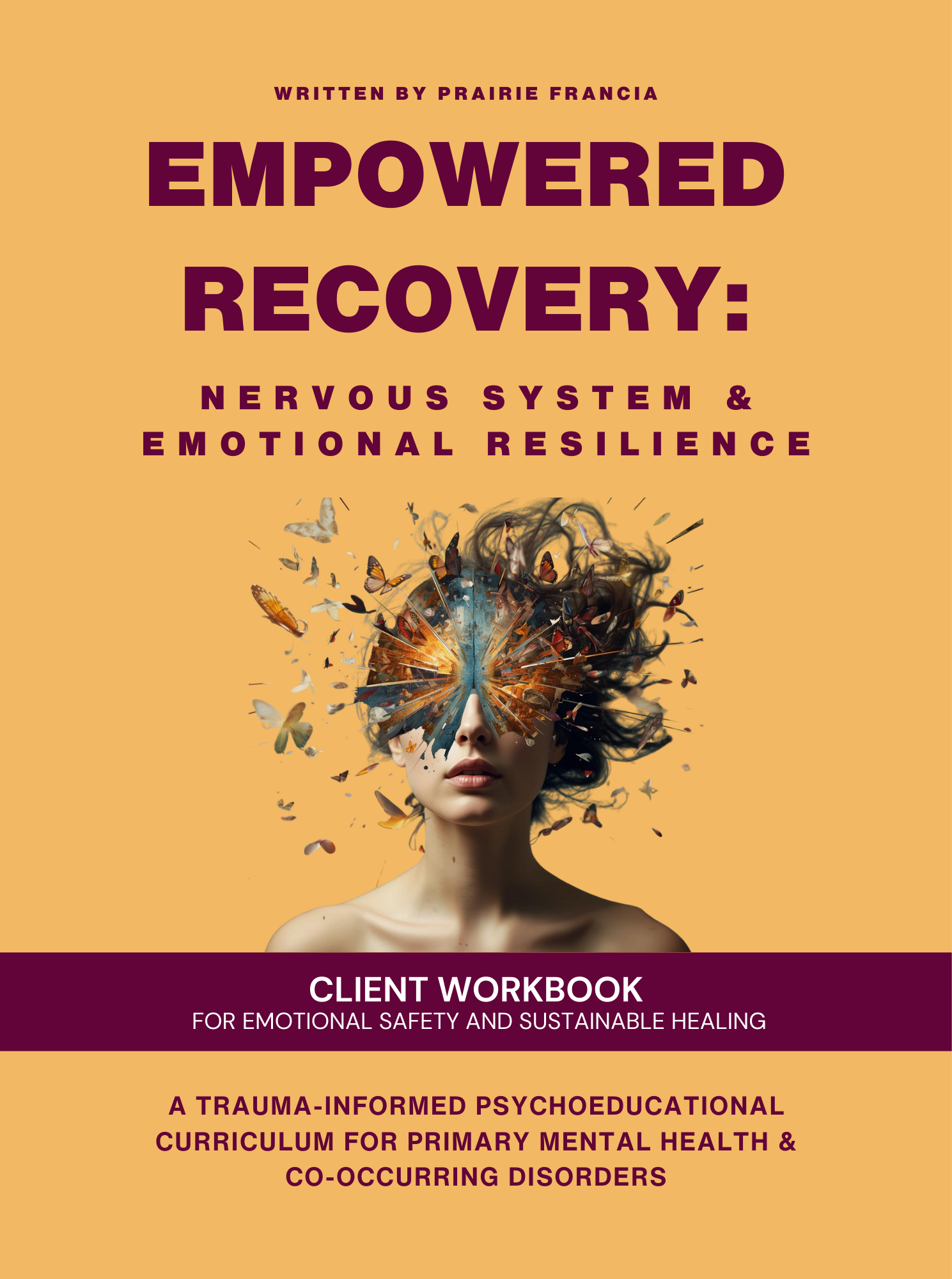
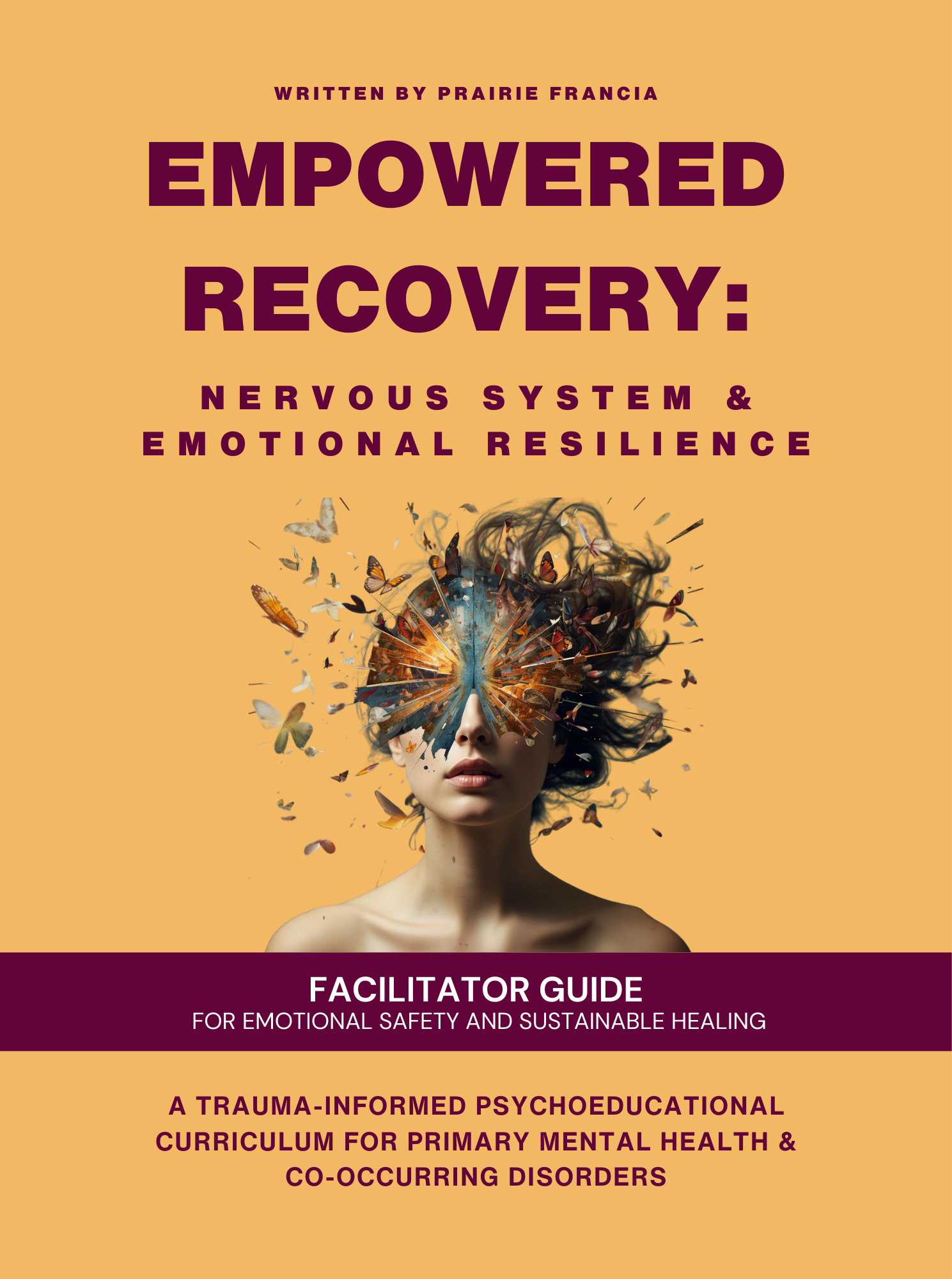
Purpose-built workbooks and facilitator materials designed to reinforce regulation, deepen insight, and create measurable client progress.
Stand Out with Your Certified Empowered Recovery Provider Badge
Showcase your commitment to structured, evidence-informed care and distinguish your practice as a trusted provider within the Empowered Recovery network—reinforcing credibility, consistency, and high-quality client outcomes.
WHAT’S INCLUDED
✔ 8+ Structured Modules
Clear lesson flows and learning objectives
✔ Facilitator Knowledge Guides
Step-by-step prep, teaching prompts, and pacing
✔ Class Flow Layouts
Minute-by-minute structure for each group
✔ Listed as an Empowered Recovery Certified Center
✔ Permission to Market Empowered Recovery on Your Site
Branded marketing package
✔ Functional Client Workbooks
Reflection, exercises, tracking, integration
✔ Digital Back Office Access
All materials organized and ready to use
✔ Annual Recovery Summit Invite
Specialized training for your whole team
✔ Workbook Subscription Access
18 Client Workbooks per month included and 5 Facilitator Guides annually, for ONE facility.*All other facilities must order their own books
See the Structure. Experience the Difference.
Before making a licensing decision, review the clarity, organization, and depth of our materials firsthand.
Each sample lesson includes:
• Facilitator knowledge overview
• Structured class flow outline
• Learning objectives
• Discussion prompts
• Client worksheet
These samples demonstrate how recovery education and mental health stabilization are delivered with consistency and cohesion.